
U.S. INTRODUCES VISA BOND FOR NIGERIAN PASSPORT HOLDERS
January 8, 2026 2026-01-08 12:25U.S. INTRODUCES VISA BOND FOR NIGERIAN PASSPORT HOLDERS
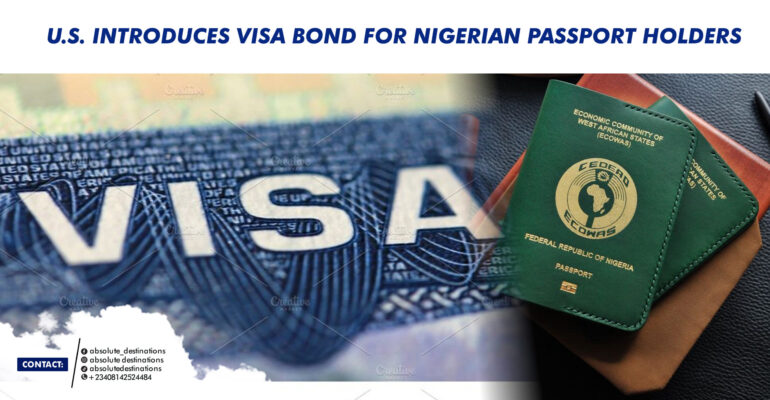

The United States’ immigration policy under President Donald Trump has drawn international attention following reports of a controversial visa bond requirement that disproportionately affects African countries. According to policy briefings and immigration analysts, applicants from selected countries are now required to pay visa bonds of up to $15,000 as a condition for temporary entry into the U.S., a move aimed at ensuring compliance with visa terms and preventing overstays.
Out of the 13 countries reportedly affected by the policy, 11 are African, raising concerns about fairness, discrimination, and the broader implications for U.S.–Africa relations. Critics argue that the high financial requirement places an unrealistic burden on ordinary travelers, students, and business visitors from Africa, effectively limiting legal mobility to the United States.
U.S. officials have defended the visa bond rule as a compliance tool rather than a travel ban, stating that it is targeted at countries with historically high rates of visa overstays. However, immigration experts note that the policy reinforces long-standing perceptions of unequal treatment of African passport holders and further complicates access to global mobility.
In response, several African governments—including Mali, Burkina Faso, and Niger—have announced reciprocal measures against U.S. citizens. These actions include tighter visa rules, increased scrutiny at borders, and discussions around imposing similar entry conditions. While analysts describe these retaliatory steps as largely symbolic, they are seen as a strong political statement asserting national dignity and demanding mutual respect in international relations.
“This is less about enforcement and more about signaling,” said a regional policy analyst. “African states are pushing back against policies they perceive as unfair, even if their responses may not have immediate economic impact.”
The development comes at a time when U.S.–Africa relations are already under strain due to shifting geopolitical alliances, security concerns in the Sahel region, and growing African engagement with non-Western partners such as China and Russia. Diplomats warn that restrictive immigration measures risk undermining people-to-people ties, academic exchange, and business cooperation between the U.S. and African nations.
As debates continue, observers note that immigration policy remains a powerful diplomatic tool—one that can either foster cooperation or deepen divisions. Whether the visa bond requirement will be revised, expanded, or repealed in future U.S. administrations remains uncertain, but its impact on African travelers and diplomatic relations is already being felt.
For now, the policy highlights a broader global conversation around mobility, equity, and the balance between border security and international partnership.