AUSTRALIA STUDENT VISA CHANGES 2026: NEW RULES, REQUIREMENTS AND WHAT NIGERIAN STUDENTS NEED TO KNOW
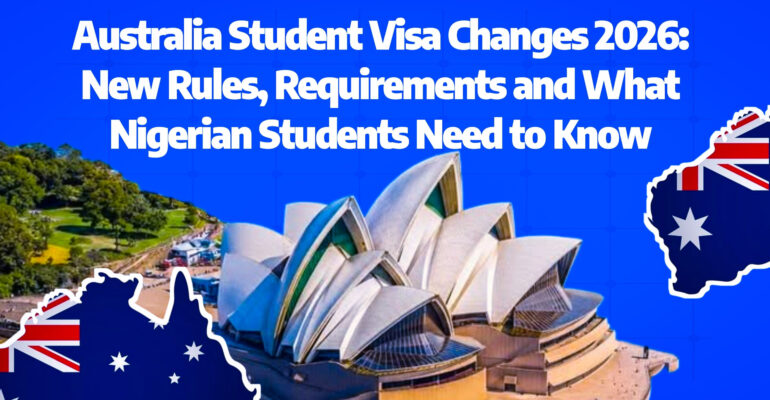

AUSTRALIA STUDENT VISA CHANGES 2026: NEW RULES, REQUIREMENTS AND WHAT NIGERIAN STUDENTS NEED TO KNOW
Australia remains a popular destination for international students seeking quality education, globally recognised qualifications and opportunities to build international careers. However, the Australian Government has introduced important student visa changes in 2026 that prospective students need to understand before choosing a course or applying for admission.
Effective 2 October 2026, new rules changed who can apply for an Australian Student visa while already in Australia and tightened the conditions for including family members in student visa applications. Additional restrictions on changing education providers are also being phased in.
For Nigerian students planning to study in Australia, these changes make early planning, careful course selection and accurate documentation more important than ever.
In this guide, Absolute Destinations explains the latest Australian student visa changes, who may be affected, the documents students should prepare and how to plan a study journey to Australia.
What Are the Latest Australia Student Visa Changes in 2026?
The Australian Government introduced new student visa integrity measures to strengthen the student visa system and ensure that visas are used primarily for genuine educational purposes.
The changes affect several areas of the international student journey, including:
- Applying for a Student visa while already in Australia.
- Including a spouse, partner or dependent children in a new student visa application.
- Applying for another Student visa while holding an existing one.
- Changing education providers or moving between courses.
- Planning family arrangements before travelling to Australia.
These reforms do not mean that Australia has stopped accepting international students. Genuine students can still apply for an Australian Student visa if they meet the applicable requirements.
However, prospective students should understand how the new rules affect their individual circumstances before making study, travel or relocation plans.
1. New Rules for Applying for an Australian Student Visa Onshore
One of the major Australia student visa changes introduced on 2 October 2026 concerns applicants who want to apply for a Student visa while already in Australia.
Under the new rules, most temporary visa holders can no longer apply for a Student visa (subclass 500) from within Australia. This includes certain Working Holiday Maker and Skills in Demand visa holders.
Existing Student visa holders are also generally restricted from applying for another Student visa onshore unless they qualify for an exemption.
Exemptions may apply to specified groups, including certain doctoral students, school students, government-sponsored students, students affected by education provider default and students who need additional time to complete their studies with the same provider.
Students progressing to a higher-level qualification may also qualify under the applicable exemption.
What does this mean for Nigerian students?
Nigerian students who are planning to apply for their first Australian Student visa from Nigeria should distinguish their situation from that of people already in Australia on temporary visas.
If you are applying from outside Australia, the new onshore application restrictions do not automatically prevent you from applying. You must still meet the usual Student visa requirements and provide the evidence requested for your circumstances.
If you are already in Australia and intend to change your immigration status or commence a new course, check your eligibility before making commitments.
Official guidance: https://immi.homeaffairs.gov.au/visas/getting-a-visa/visa-listing/changes-to-student-visa-application-rules-500-590
2. Can International Students Bring Their Spouse or Children to Australia in 2026?
Family arrangements are another important area affected by the new rules.
From 2 October 2026, most applicants lodging a new Student visa application can no longer include family members unless a specified exemption applies.
The published exemptions include certain doctoral students, nationals of Pacific countries and ASEAN member states, fully funded foreign government scholarship recipients, and students sponsored by the Australian Department of Foreign Affairs and Trade or the Australian Department of Defence.
Nigerian applicants should not assume that they qualify for an exemption simply because they are married, have children or can demonstrate sufficient funds.
Can a student add a spouse after the visa is granted?
Under the new rules, students cannot add family members to their Student visa after the visa has been granted. The ability to add subsequent entrants has been removed, including for students who might otherwise qualify for an exemption.
Some transitional arrangements apply to family members already included in applications or visas before 2 October 2026. These arrangements are subject to specific eligibility conditions.
What should Nigerian students do?
If you intend to study in Australia with your spouse or children, investigate the applicable family visa rules before accepting an offer or paying a tuition deposit.
Your education plan should account for the cost of living, accommodation, family travel and the immigration status available to each family member.
Because the rules are specific to the applicant’s circumstances, obtain current official guidance before deciding whether family members can accompany you.
3. Changes to Course Transfers and Education Providers
Choosing the right Australian institution and course from the beginning is increasingly important.
Australia is strengthening restrictions on international students who change education providers after arriving in the country.
As an interim measure introduced on 2 October 2026, non-school international students generally need to remain in their principal course for 12 months before seeking to transfer to another provider, up from the previous six-month period. Exceptions may apply in specified circumstances, including where a provider or course ceases to operate.
A new Student visa transfer stream is planned for 2027, with the announced transition to the new arrangement scheduled for 1 July 2027.
The reforms are intended to limit inappropriate course transfers and prevent students from using higher-level study as a route to move into lower-level vocational courses after arrival.
How can you choose the right course?
Before applying, consider:
- Academic progression: Does the proposed qualification build logically on your previous education?
- Career relevance: Will the course help you achieve your professional goals?
- Institution suitability: Does the provider offer the programme, support and learning environment you need?
- Financial planning: Can you realistically cover tuition fees and living expenses?
- Long-term goals: Have you considered the possible career pathways available after graduation without assuming that a particular visa or permanent residence outcome is guaranteed?
A well-planned course selection can help you make a more informed application and reduce the likelihood of needing an avoidable transfer.
4. Understanding the Genuine Student Requirement
Meeting the academic admission requirements of an Australian institution does not automatically guarantee a student visa.
Applicants must also satisfy Australia’s immigration requirements, including the Genuine Student requirement where applicable.
The Genuine Student assessment is designed to determine whether an applicant genuinely intends to study and has circumstances consistent with the proposed educational programme.
Your application should explain:
- Your current personal, academic and employment circumstances.
- Why you selected Australia as a study destination.
- Why you chose the institution and course.
- How the qualification relates to your previous education and career plans.
- Your previous study and immigration history, where relevant.
- Your financial circumstances and ability to fund your studies.
Why documentation matters
Your explanations should be consistent with the evidence in your application.
For example, if you intend to pursue a master’s degree in business analytics after obtaining a bachelor’s degree in a related field, explain how the advanced qualification fits your career objectives.
If you are changing disciplines, explain the reason for the change and how the proposed programme supports your professional development.
Avoid generic statements that could apply to any student or institution. Your application should present a credible, evidence-supported explanation of your individual circumstances.
5. Australian Student Visa Requirements for Nigerian Applicants
Nigerian students applying for an Australian Student visa should prepare carefully and check the current requirements for their individual applications.
Depending on your circumstances, the application may require the following:
- A valid passport and identity information.
- A Confirmation of Enrolment (CoE) from an eligible Australian education provider.
- Evidence addressing the Genuine Student requirement.
- Financial capacity evidence, where required.
- English language evidence, where required.
- Academic certificates, transcripts and other relevant education records.
- Overseas Student Health Cover (OSHC), as applicable.
- Health examinations or police certificates, if requested or required.
- Additional supporting documents specified in your application checklist.
This is a general preparation list, not an exhaustive list of mandatory documents for every applicant. Requirements can vary according to the applicant, course, institution and circumstances.
How much money do you need for an Australian Student visa?
There is no single total budget that applies to every student. You should plan for tuition fees, living costs, travel expenses, health insurance and other relevant expenses.
The financial capacity evidence required for a student visa must be checked against the current Australian Department of Home Affairs rules. Do not rely on outdated financial thresholds or assume that paying your first tuition instalment alone will satisfy the financial requirement.
Students should also consider exchange-rate movements when planning to pay tuition and living expenses from Nigeria.
Before submitting your application, use the official Australian Department of Home Affairs guidance and document checklist to confirm the current requirements.
6. What Is the Cost of Studying in Australia?
The cost of studying in Australia depends on the education provider, qualification, city and personal lifestyle.
Your budget should account for:
Tuition fees: These vary significantly between universities, vocational education providers, schools and English language colleges.
Living expenses: Rent, food, utilities, transport and personal expenses can represent a substantial part of your budget.
Health insurance: International students generally need to arrange the required Overseas Student Health Cover.
Visa and travel expenses: Include the applicable visa application charge, flights and initial settlement costs.
Study-related expenses: Books, equipment, course materials and other academic expenses may also apply.
The Australian Student visa application charge increased to AUD 2,500 on 1 July 2026, subject to specified concessions. Always confirm the applicable fee before paying, as government charges can change.
A realistic budget helps you compare institutions and choose a study option that fits your academic ambitions and financial circumstances.
7. Is Australia Still a Good Study Destination for Nigerian Students?
Yes. Australia continues to welcome genuine international students who meet its visa and admission requirements.
The 2026 reforms do, however, make it especially important to understand the immigration rules before choosing a programme or planning to relocate.
Australia offers a range of educational options, including:
- Undergraduate degrees.
- Postgraduate diplomas and master’s degrees.
- Doctoral and research programmes.
- Vocational education and training.
- English language programmes.
The best option depends on your previous qualifications, career plans, budget and preferred learning environment.
Students should evaluate each institution and course on its own merits rather than choosing a programme solely because they believe it offers an easy route to a visa or permanent residence.
8. How to Apply for an Australian Student Visa from Nigeria
If you are planning to study in Australia, a structured approach can help you avoid unnecessary delays and expenses.
Step 1: Identify your preferred course
Research programmes that match your academic background, professional goals and budget.
Step 2: Compare Australian institutions
Review entry requirements, tuition fees, course duration, location and student support services.
Step 3: Apply for admission
Submit the required academic and supporting documents to your selected education provider.
Step 4: Receive your Confirmation of Enrolment
Once you meet the institution’s admission and enrolment requirements, follow its instructions for securing your Confirmation of Enrolment.
Step 5: Prepare your student visa application
Review the current subclass 500 requirements, Genuine Student criteria, financial evidence and document checklist.
Step 6: Submit your application
Lodge your application through the official Australian immigration system and provide the requested evidence.
Step 7: Prepare for your departure
After your visa is granted, organise your flights, accommodation, health insurance and travel arrangements. Check your visa conditions and the latest travel requirements before departure.
Remember that admission to an Australian institution and approval of an Australian Student visa are separate decisions. A visa is not guaranteed simply because you have received an offer or paid tuition fees.
9. How Absolute Destinations Can Help You Plan Your Study Journey
Planning international education involves more than choosing a university. Students must also coordinate admission requirements, tuition payments, immigration documentation, travel arrangements and accommodation.
Absolute Destinations helps students and travellers plan international journeys with a focus on making the process clearer and more convenient.
If Australia is your preferred study destination, start by researching suitable institutions and understanding the requirements that apply to your situation.
Our team can help you explore the practical steps involved in planning your education journey, subject to the services available and the relevant professional requirements.
Ready to start planning your Australian study journey?
Contact Absolute Destinations to discuss your study plans and explore the next steps towards studying in Australia.
Plan early, choose carefully and make informed decisions before committing to your international education journey.
Frequently Asked Questions About Australia’s Student Visa Changes in 2026
1. Has Australia stopped issuing student visas to Nigerians in 2026?
No. Australia continues to accept Student visa applications from eligible international students, including Nigerian applicants. Applicants must satisfy the applicable admission and immigration requirements.
2. What changed in Australia’s student visa rules on 2 October 2026?
The changes include restrictions on most temporary visa holders applying for a student visa from within Australia, tighter rules on including family members and additional restrictions concerning transfers between education providers.
3. Can Nigerians apply for an Australian Student visa from Nigeria?
Yes. Nigerian students can apply from outside Australia if they meet the relevant requirements. The new restrictions on applying from within Australia do not, by themselves, prevent an eligible applicant from applying offshore.
4. Can I bring my spouse or children to Australia on a Student visa?
Most new Student visa applicants can no longer include family members unless a specified exemption applies. Nigerian students should check the current rules carefully before making family or travel arrangements.
5. Can I change my university after arriving in Australia?
Transfers are subject to restrictions. Under the interim rules introduced in October 2026, non-school students generally need to remain in their principal course for 12 months before transferring, unless an exception applies. Further reforms are planned for 2027.
6. What is the Genuine Student requirement?The Genuine Student requirement assesses whether an applicant genuinely intends to study in Australia. Applicants should provide clear explanations supported byAustralia Student Visa Changes 2026: New Rules, Requirements and What Nigerian Students Need to Know
Australia remains a popular destination for international students seeking quality education, globally recognised qualifications and opportunities to build international careers. However, the Australian Government has introduced important student visa changes in 2026 that prospective students need to understand before choosing a course or applying for admission.
Effective 2 October 2026, new rules changed who can apply for an Australian Student visa while already in Australia and tightened the conditions for including family members in student visa applications. Additional restrictions on changing education providers are also being phased in.
For Nigerian students planning to study in Australia, these changes make early planning, careful course selection and accurate documentation more important than ever.
In this guide, Absolute Destinations explains the latest Australian student visa changes, who may be affected, the documents students should prepare and how to plan a study journey to Australia.
What Are the Latest Australia Student Visa Changes in 2026?
The Australian Government introduced new student visa integrity measures to strengthen the student visa system and ensure that visas are used primarily for genuine educational purposes.
The changes affect several areas of the international student journey, including:
- Applying for a Student visa while already in Australia.
- Including a spouse, partner or dependent children in a new student visa application.
- Applying for another Student visa while holding an existing one.
- Changing education providers or moving between courses.
- Planning family arrangements before travelling to Australia.
These reforms do not mean that Australia has stopped accepting international students. Genuine students can still apply for an Australian Student visa if they meet the applicable requirements.
However, prospective students should understand how the new rules affect their individual circumstances before making study, travel or relocation plans.
1. New Rules for Applying for an Australian Student Visa Onshore
One of the major Australia student visa changes introduced on 2 October 2026 concerns applicants who want to apply for a Student visa while already in Australia.
Under the new rules, most temporary visa holders can no longer apply for a Student visa (subclass 500) from within Australia. This includes certain Working Holiday Maker and Skills in Demand visa holders.
Existing Student visa holders are also generally restricted from applying for another Student visa onshore unless they qualify for an exemption.
Exemptions may apply to specified groups, including certain doctoral students, school students, government-sponsored students, students affected by education provider default and students who need additional time to complete their studies with the same provider.
Students progressing to a higher-level qualification may also qualify under the applicable exemption.
What does this mean for Nigerian students?
Nigerian students who are planning to apply for their first Australian Student visa from Nigeria should distinguish their situation from that of people already in Australia on temporary visas.
If you are applying from outside Australia, the new onshore application restrictions do not automatically prevent you from applying. You must still meet the usual Student visa requirements and provide the evidence requested for your circumstances.
If you are already in Australia and intend to change your immigration status or commence a new course, check your eligibility before making commitments.
Official guidance: https://immi.homeaffairs.gov.au/visas/getting-a-visa/visa-listing/changes-to-student-visa-application-rules-500-590
2. Can International Students Bring Their Spouse or Children to Australia in 2026?
Family arrangements are another important area affected by the new rules.
From 2 October 2026, most applicants lodging a new Student visa application can no longer include family members unless a specified exemption applies.
The published exemptions include certain doctoral students, nationals of Pacific countries and ASEAN member states, fully funded foreign government scholarship recipients, and students sponsored by the Australian Department of Foreign Affairs and Trade or the Australian Department of Defence.
Nigerian applicants should not assume that they qualify for an exemption simply because they are married, have children or can demonstrate sufficient funds.
Can a student add a spouse after the visa is granted?
Under the new rules, students cannot add family members to their Student visa after the visa has been granted. The ability to add subsequent entrants has been removed, including for students who might otherwise qualify for an exemption.
Some transitional arrangements apply to family members already included in applications or visas before 2 October 2026. These arrangements are subject to specific eligibility conditions.
What should Nigerian students do?
If you intend to study in Australia with your spouse or children, investigate the applicable family visa rules before accepting an offer or paying a tuition deposit.
Your education plan should account for the cost of living, accommodation, family travel and the immigration status available to each family member.
Because the rules are specific to the applicant’s circumstances, obtain current official guidance before deciding whether family members can accompany you.
3. Changes to Course Transfers and Education Providers
Choosing the right Australian institution and course from the beginning is increasingly important.
Australia is strengthening restrictions on international students who change education providers after arriving in the country.
As an interim measure introduced on 2 October 2026, non-school international students generally need to remain in their principal course for 12 months before seeking to transfer to another provider, up from the previous six-month period. Exceptions may apply in specified circumstances, including where a provider or course ceases to operate.
A new Student visa transfer stream is planned for 2027, with the announced transition to the new arrangement scheduled for 1 July 2027.
The reforms are intended to limit inappropriate course transfers and prevent students from using higher-level study as a route to move into lower-level vocational courses after arrival.
How can you choose the right course?
Before applying, consider:
- Academic progression: Does the proposed qualification build logically on your previous education?
- Career relevance: Will the course help you achieve your professional goals?
- Institution suitability: Does the provider offer the programme, support and learning environment you need?
- Financial planning: Can you realistically cover tuition fees and living expenses?
- Long-term goals: Have you considered the possible career pathways available after graduation without assuming that a particular visa or permanent residence outcome is guaranteed?
A well-planned course selection can help you make a more informed application and reduce the likelihood of needing an avoidable transfer.
4. Understanding the Genuine Student Requirement
Meeting the academic admission requirements of an Australian institution does not automatically guarantee a student visa.
Applicants must also satisfy Australia’s immigration requirements, including the Genuine Student requirement where applicable.
The Genuine Student assessment is designed to determine whether an applicant genuinely intends to study and has circumstances consistent with the proposed educational programme.
Your application should explain:
- Your current personal, academic and employment circumstances.
- Why you selected Australia as a study destination.
- Why you chose the institution and course.
- How the qualification relates to your previous education and career plans.
- Your previous study and immigration history, where relevant.
- Your financial circumstances and ability to fund your studies.
Why documentation matters
Your explanations should be consistent with the evidence in your application.
For example, if you intend to pursue a master’s degree in business analytics after obtaining a bachelor’s degree in a related field, explain how the advanced qualification fits your career objectives.
If you are changing disciplines, explain the reason for the change and how the proposed programme supports your professional development.
Avoid generic statements that could apply to any student or institution. Your application should present a credible, evidence-supported explanation of your individual circumstances.
5. Australian Student Visa Requirements for Nigerian Applicants
Nigerian students applying for an Australian Student visa should prepare carefully and check the current requirements for their individual applications.
Depending on your circumstances, the application may require the following:
- A valid passport and identity information.
- A Confirmation of Enrolment (CoE) from an eligible Australian education provider.
- Evidence addressing the Genuine Student requirement.
- Financial capacity evidence, where required.
- English language evidence, where required.
- Academic certificates, transcripts and other relevant education records.
- Overseas Student Health Cover (OSHC), as applicable.
- Health examinations or police certificates, if requested or required.
- Additional supporting documents specified in your application checklist.
This is a general preparation list, not an exhaustive list of mandatory documents for every applicant. Requirements can vary according to the applicant, course, institution and circumstances.
How much money do you need for an Australian Student visa?
There is no single total budget that applies to every student. You should plan for tuition fees, living costs, travel expenses, health insurance and other relevant expenses.
The financial capacity evidence required for a student visa must be checked against the current Australian Department of Home Affairs rules. Do not rely on outdated financial thresholds or assume that paying your first tuition instalment alone will satisfy the financial requirement.
Students should also consider exchange-rate movements when planning to pay tuition and living expenses from Nigeria.
Before submitting your application, use the official Australian Department of Home Affairs guidance and document checklist to confirm the current requirements.
6. What Is the Cost of Studying in Australia?
The cost of studying in Australia depends on the education provider, qualification, city and personal lifestyle.
Your budget should account for:
Tuition fees: These vary significantly between universities, vocational education providers, schools and English language colleges.
Living expenses: Rent, food, utilities, transport and personal expenses can represent a substantial part of your budget.
Health insurance: International students generally need to arrange the required Overseas Student Health Cover.
Visa and travel expenses: Include the applicable visa application charge, flights and initial settlement costs.
Study-related expenses: Books, equipment, course materials and other academic expenses may also apply.
The Australian Student visa application charge increased to AUD 2,500 on 1 July 2026, subject to specified concessions. Always confirm the applicable fee before paying, as government charges can change.
A realistic budget helps you compare institutions and choose a study option that fits your academic ambitions and financial circumstances.
7. Is Australia Still a Good Study Destination for Nigerian Students?
Yes. Australia continues to welcome genuine international students who meet its visa and admission requirements.
The 2026 reforms do, however, make it especially important to understand the immigration rules before choosing a programme or planning to relocate.
Australia offers a range of educational options, including:
- Undergraduate degrees.
- Postgraduate diplomas and master’s degrees.
- Doctoral and research programmes.
- Vocational education and training.
- English language programmes.
The best option depends on your previous qualifications, career plans, budget and preferred learning environment.
Students should evaluate each institution and course on its own merits rather than choosing a programme solely because they believe it offers an easy route to a visa or permanent residence.
8. How to Apply for an Australian Student Visa from Nigeria
If you are planning to study in Australia, a structured approach can help you avoid unnecessary delays and expenses.
Step 1: Identify your preferred course
Research programmes that match your academic background, professional goals and budget.
Step 2: Compare Australian institutions
Review entry requirements, tuition fees, course duration, location and student support services.
Step 3: Apply for admission
Submit the required academic and supporting documents to your selected education provider.
Step 4: Receive your Confirmation of Enrolment
Once you meet the institution’s admission and enrolment requirements, follow its instructions for securing your Confirmation of Enrolment.
Step 5: Prepare your student visa application
Review the current subclass 500 requirements, Genuine Student criteria, financial evidence and document checklist.
Step 6: Submit your application
Lodge your application through the official Australian immigration system and provide the requested evidence.
Step 7: Prepare for your departure
After your visa is granted, organise your flights, accommodation, health insurance and travel arrangements. Check your visa conditions and the latest travel requirements before departure.
Remember that admission to an Australian institution and approval of an Australian Student visa are separate decisions. A visa is not guaranteed simply because you have received an offer or paid tuition fees.
9. How Absolute Destinations Can Help You Plan Your Study Journey
Planning international education involves more than choosing a university. Students must also coordinate admission requirements, tuition payments, immigration documentation, travel arrangements and accommodation.
Absolute Destinations helps students and travellers plan international journeys with a focus on making the process clearer and more convenient.
If Australia is your preferred study destination, start by researching suitable institutions and understanding the requirements that apply to your situation.
Our team can help you explore the practical steps involved in planning your education journey, subject to the services available and the relevant professional requirements.
Ready to start planning your Australian study journey?
Contact Absolute Destinations to discuss your study plans and explore the next steps towards studying in Australia.
Plan early, choose carefully and make informed decisions before committing to your international education journey.
Frequently Asked Questions About Australia’s Student Visa Changes in 2026
1. Has Australia stopped issuing student visas to Nigerians in 2026?
No. Australia continues to accept Student visa applications from eligible international students, including Nigerian applicants. Applicants must satisfy the applicable admission and immigration requirements.
2. What changed in Australia’s student visa rules on 2 October 2026?
The changes include restrictions on most temporary visa holders applying for a student visa from within Australia, tighter rules on including family members and additional restrictions concerning transfers between education providers.
3. Can Nigerians apply for an Australian Student visa from Nigeria?
Yes. Nigerian students can apply from outside Australia if they meet the relevant requirements. The new restrictions on applying from within Australia do not, by themselves, prevent an eligible applicant from applying offshore.
4. Can I bring my spouse or children to Australia on a Student visa?
Most new Student visa applicants can no longer include family members unless a specified exemption applies. Nigerian students should check the current rules carefully before making family or travel arrangements.
5. Can I change my university after arriving in Australia?
Transfers are subject to restrictions. Under the interim rules introduced in October 2026, non-school students generally need to remain in their principal course for 12 months before transferring, unless an exception applies. Further reforms are planned for 2027.
6. What is the Genuine Student requirement?
The Genuine Student requirement assesses whether an applicant genuinely intends to study in Australia. Applicants should provide clear explanations supported by relevant evidence about their background, chosen course, institution and educational objectives.
7. How much does an Australian Student visa cost in 2026?
The standard Student visa application charge increased to AUD 2,500 on 1 July 2026, with specified concessions. Confirm the fee that applies to your circumstances before submitting your application.
8. Does admission to an Australian university guarantee a student visa?
No. Education providers make admission decisions, while the Australian Government assesses visa applications separately. Applicants must meet all applicable visa requirements.
9. Where can I find the official Australian Student visa requirements?
Visit the Australian Department of Home Affairs website for the latest requirements, application procedures and document checklists: https://immi.homeaffairs.gov.au/
Final Thoughts
The Australia student visa changes in 2026 highlight the importance of planning your international education journey carefully.
For Nigerian students, the most important steps are to choose a suitable programme, understand the Genuine Student requirement, prepare accurate financial and academic evidence, and confirm whether the new rules affect any family or course-transfer plans.
With the right preparation and reliable information, you can make better decisions about studying in Australia and take the next step towards your academic and professional goals.
Absolute Destinations — plan your journey with confidence.